


From Environmental Testing to Medical Remediation
Understanding the pathway from concerning results to a professionally remediated home
By Justin Sachs and Yaron Lief | MedViro
An elevated environmental test result can establish a reason to investigate your home, but it rarely provides a complete explanation of what needs to happen next. You may know that your HERTSMI-2 score is concerning without knowing which building materials are affected. You may have a CIRS diagnosis and a recommendation to address environmental exposure, yet still face competing opinions about testing, demolition, and cleaning.
The challenge is translating those findings into a coordinated project. Broad environmental sampling, targeted investigation, source removal, and small-particle cleaning serve different purposes. Understanding how they fit together can help you select the right professionals and avoid paying for work that leaves an important part of the problem unresolved.
The pathway at a glance
-Establish the starting conditions. Begin with homeowner-collected MSQPCR dust testing or an assessment directed by a qualified environmental professional.
-Locate the likely sources. Use the building investigation and appropriate targeted testing to establish where remediation is needed.
-Perform medical remediation. Have an experienced team conduct targeted demolition and detailed cleaning under the project’s specified containment and exposure controls.
-Verify the remediated area. Complete post-remediation cleaning, followed by independent post-remediation verification.
-Complete small-particle cleaning. Address residual settled contamination beyond the source-removal areas and evaluate that phase against the project’s completion criteria.
Two entry points into the same process
Some homeowners begin by collecting a dust sample themselves. Others hire an indoor environmental professional to direct the assessment from the outset. The choice changes how the investigation begins, while the need for a defensible remediation plan remains the same.
For the homeowner-collected approach, MSQPCR testing provides a way to characterize selected molds in settled dust. Collection commonly uses a dry, unscented Swiffer-style cloth approved by the laboratory. Following the laboratory’s instructions matters because the locations sampled and the condition of the collected dust affect what the result represents. The sample is then submitted for laboratory analysis.
This can be a useful starting point for a homeowner who needs information before commissioning a more extensive investigation. The result still requires interpretation: a broad dust sample represents material collected across the sampled environment, rather than a map of growth within the building.
An environmental professional can instead manage the investigation from the beginning, reviewing prior reports and the property’s history before deciding where sampling will add value. This approach is particularly useful when there have been multiple water events, previous remediation, suspected concealed damage, or conflicting results. The homeowner should receive a written explanation of the findings, the investigation’s limitations, and the recommended next steps.
Moving from a broad result to a targeted investigation
A concerning MSQPCR result raises the question of where the organisms represented in that sample may be originating. Answering that question requires a closer look at the building.
At MedViro, we use targeted tools such as Pathways™ and Mycometer testing, where appropriate, to help narrow the investigation. They serve different functions. Pathways measures protein residues that can help identify locations warranting further investigation; it is not a mold-specific identification test. Mycometer Surface Fungi uses enzyme activity to quantify fungal biomass on sampled surfaces. Neither should be interpreted without considering the location sampled and the surrounding building conditions.
For example, elevated findings near a wall assembly may justify closer investigation of that assembly. The environmental professional must then consider the moisture history, visible conditions, and other evidence before establishing the proposed scope. If the assembly must be opened to determine the extent of damage, that exploratory work should be planned with appropriate controls.
The objective is to give the remediation team a supported starting point and a process for responding to what is uncovered. Demolition boundaries may need to change as concealed conditions become accessible. Those changes should be documented and coordinated with the professional directing the environmental scope.
Selecting a team capable of medical remediation
For a medically sensitive household, the contractor’s ability to execute the protocol deserves close attention. Experience with general water damage restoration does not, by itself, establish experience with the controls and detailed cleaning specified for a medical remediation project.
Before work begins, ask the contractor to explain how the proposed containment will function, how pressure will be monitored, and how workers, waste, and equipment will move through the project. Responsibility for moisture repairs, HVAC concerns, contents, and verification should also be established. A proposal that leaves those responsibilities undefined can create expensive gaps between otherwise competent professionals.
Medical remediation protocols may require tightly sealed containment, monitored negative air pressure, and decontamination chambers to manage ingress and egress. Surviving Mold’s microbial remediation consensus addresses these controls and emphasizes evaluating airflow pathways and conditions that could affect their performance. Containment must work throughout the project; its presence alone does not demonstrate that contamination is being controlled.
Within the controlled work area, the team removes affected materials according to the scope and performs detailed cleaning of retained surfaces. Abrasive methods may be appropriate to remove attached growth and contamination from suitable materials. Visible growth must be addressed, while residual discoloration requires professional evaluation; appearance alone cannot establish whether a surface has been adequately remediated.
Cleaning and verifying the source-removal area
Once demolition and surface remediation are complete, the containment area receives post-remediation cleaning. This prepares the work area for evaluation and is part of the remediation itself.
Post-remediation verification, commonly called PRV, should be planned before the contractor begins. The project needs agreed completion criteria, an identified evaluator, and a defined response if the area does not meet those criteria. An independent third party is generally preferable because it separates performance of the work from evaluation of the result.
PRV is broader than a laboratory test. It involves assessing the completed area, including the conditions specified in the protocol, together with any required sampling. EPA’s guidance identifies correction of the moisture problem, removal of visible mold and moldy odors, and follow-up for recurrence among the considerations for evaluating completion.
The timing matters as well. Evaluation of exposed framing or other retained materials should be coordinated with reconstruction so the relevant surfaces remain accessible. If deficiencies are identified, the team addresses them before that phase of work is accepted.
Why small-particle cleaning follows source remediation
Successful verification of the source-removal area does not establish that every other area of the home has been addressed. The initial PRV evaluates a defined portion of the project.
Following that verification, the sequence described here proceeds to small-particle cleaning of the areas identified in the environmental plan. This phase addresses residual settled microbial material and associated dust on surfaces and contents beyond the source-removal area. Surviving Mold’s consensus distinguishes removal of affected materials from environmental cleaning of microbial material that has dispersed to other locations.
For the homeowner, the distinction has practical consequences. A proposal to remove contaminated drywall and clean the containment may leave broader environmental cleaning outside its scope. That exclusion needs to be understood before the project begins, with a responsible party and budget assigned to the remaining work.
Small-particle cleaning should therefore be an explicit phase of the plan, with defined areas, contents-handling responsibilities, and completion criteria. Its extent should follow the investigation and project findings. The team should explain how cleaning will be coordinated with reconstruction and the return of belongings so completed areas are protected during the remaining work.
Bringing the project through completion
A complete environmental project needs continuity from the initial findings through the final evaluation. Before closing the project, obtain the assessment, documentation of scope changes and moisture repairs, verification results, and any recommendations for maintenance or further investigation.
Your environmental professional should explain what was evaluated and what limitations remain. Your clinician should continue to guide medical care and decisions relevant to your individual circumstances. Environmental verification documents the outcome of defined work; it cannot guarantee a particular course of medical recovery.
For someone already managing CIRS, the value of a clear pathway is knowing why each phase is being performed and how it supports the next. Broad testing informs the investigation. The investigation supports targeted remediation. Verification evaluates that work, and small-particle cleaning addresses the broader areas included in the plan. Each phase needs an accountable professional and an outcome that can be explained to the homeowner.
About the authors
Justin Sachs and Yaron Lief are co-founders of MedViro and authors of the book Medically Remediated Home, which specializes in environmental and medical mold remediation for medically sensitive occupants throughout the United States, Canada, the United Kingdom and Israel. Their work brings together building science, environmental investigation, remediation, and professional education to help patients navigate the environmental component of their care. Learn more at MedViro.com.


Featured Resources for Remediation
Shoemaker Protocol™ Quick Start:
The 3 initial steps to determine if mold is affecting you One of the most common questions we hear is, “how do I know if I have mold illness?” Rest assured, if you’re asking this question, you’ve come to the right place.
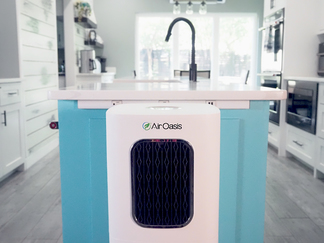
AirOasis The #1 CIRS Spring Cleaning Hack
Specialized air purifiers are revolutionizing deep cleaning, no matter the season. They’re a game changer for remediation purposes, too.
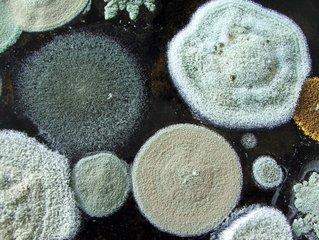
Free Got Mold Guide
The only science-based, proven, peer-reviewed path to recovery. Discover the Shoemaker process and protocol for diagnosing, testing and treating Mold Illness.
The Surviving Mold Membership Program
The Membership Program was created as a place for both CIRS patients and practitioners to learn, stay current, connect, and thrive as they learn what it means to navigate life with CIRS.

Healing connections: Doctors who embrace their practice with the soul of a poet.
The following article pulls a few excerpts from a piece by one of Dr. Shoemaker’s patients, Shaler McClure Wright. The piece appeared as an episode in a series titled, “Soul Chronicles for the Chronically Ill” on healthstorycollaborative.org